Sunday, August 30, 2015

Tan Tan Morocco

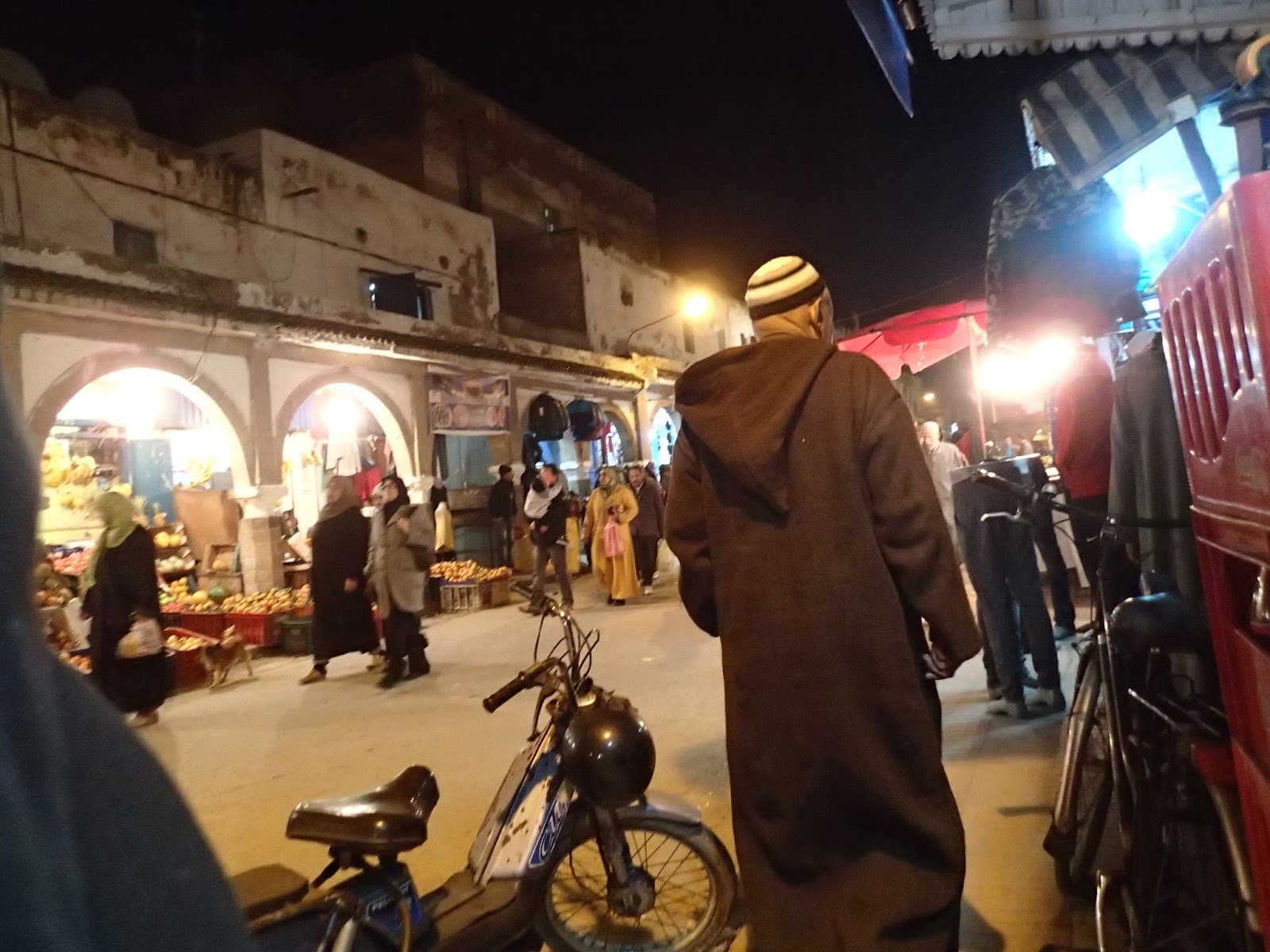
The port of Tan Tan is near the village of El Quatia with with the town of Tan Tan located several kilometers inland. Upon arrival we were directed to tie to a tug and were met by the usual group of officials to do the clearing in process. Again we were made to feel welcome and there was no"problems" with any of the passports.  Later that day one of the military officials that cleared us in stopped by to ask if we wanted a ride into Tan Tan which of course we accepted. We were given a short tour of El Quatia and Tan Tan and shown where to get taxis in and out of town and what not to take pictures of. We had become a  bit of a curiosity in the area and were evidently much talked about. All of us were sitting in a shop that we found for refreshments and internet and were surprised when the officials from the port came in to ask us to move the boat so the tug could get out. How they found us that easily in a place we stopped at by chance is still a mystery.  Nomad moved to an empty place on the far end of the harbor to watch the manuevers and became a local attraction as a crowd gathered to stare at the boat. The blowing dust and the ever present flies were becoming more troublesome as we headed further south in the Western Sahara. After being sandblasted while walking on the beach we came to understand why people here in the desert favor the the long robes with hoods for protection from the sand and wind.
Since we decided some time ago to make a trip to The Gambia we needed some anti malaria pills and yellow fever vaccine. We searched all over Agadir but the answer was always the same: you must go to this place in Casablanca that was an eight hour bus ride away. Not being interested in  sixteen hours on a bus and another huge city to deal with, we learned that it was
available in the Canary islands so we cleared out of Morocco and set sail for Lanzarote on the twenty fourth of December. 

Tied to a tug in Tan Tan
The beach in Tan Tan

Atlantic surf

Tan Tan fishing fleet

Main market street in Tan Tan

Saharan sunset, returning from Tan Tan

Tan Tan streets

Looking towards the port

Fishing fleet tied up below the pot's offices

Olives lemons and chickens for sale in El Quatia

Clothes for sale in Tan Tan

El Quatia streets

El Quatia mosque

Off road campers

Saturday, August 29, 2015

Sidi Ifni Morocco

Beginning of the Western Sahara
As the sun rose over the blue-green coastal waters of Morocco, Nomad was becalmed thirty six miles out of Sidi Ifni.The overnight sail brought a radical change in scenery with the Atlas mountains now out of sight and the beginning of the Western Sahara silhouetted by the sunrise. After enjoying the tranquility of the sunrise, the motor was reluctantly started to ensure our arrival during working hours. The guidebook had only a few details of the harbor plan and none was shown on the chart so we worked our way around the charted shoal in the big Atlantic swell to line up on the harbor entrance and cautiously made our way in past a dredge working in the channel. We were directed to tie up on the wharf behind a tugboat where we were met by the usual group of officials. There was another sailboat tied up ahead of the tug, but it turned out to be a wreck that had been pulled off the beach. We were looking forward to exploring a new area after reading about it in the guidebooks, but it was not to be. After completing the usual paperwork, I had to go to an office to retrieve our passports with the entrance stamps. It was becoming a routine, but time consuming procedure at each port. However there was a undefined "problem" with Kris's Polish passport. It could be fixed in the next port,Tan Tan, but not here. We were given 24 hours to visit Sidi Ifni and then we had to leave. In Tan Tan of course the was no problem -I asked-  we are welcome to stay. The officials were quite friendly in Sidi Ifni, even offering the ever present mint tea while doing paperwork but the impression is that they would prefer not to have us here in their harbor,although tourists traveling by land are welcome. Twenty four hours is not much time but we made the most of it walking into town and on the great beach backed by red rock cliffs with the town on top. The sky was beginning to be less blue and more slate grey from the blowing dust brought by the easterly winds blowing off the Sahara. The clear grey sky sky and the bit of blowing sand was just a taste of things to come as we progressed down the African coast. 
Dredging the Sidi Ifni entrance channel

The wharf in Sidi Ifni

Sidi Ifni overlooks the Atlantic beaches

Beachcombing on miles of deserted beaches

Thursday, August 27, 2015

Agadir Morocco

Agadir from the kasbah
 Nomad arrived in Agadir after a twenty six hour sail from Essaouira that started out with a nice 15-20 breeze that slowly went to calm during the trip with the boat speed down to a couple of knots by then end of the day. It was a good introduction to sailing for Lyza and Kris first trip on the ocean. This was their second trip to Agadir so finding places in town was easier with some local knowledge. The yacht harbor in Agadir with its floating dock was to be the only facility of its kind on Morocco's Atlantic coast with daily, weekly and monthly rates. The next morning we cleared in, again. Morocco requires full clearance in and out every time the boat moves.By the time we left Morocco for the last time my passport had accumulated more than three pages of entry and exit stamps from each port. Agadir had the look and feel of any beach resort town and was not exactly the kind of place I would seek out, but it was the last chance to resupply before heading into the more remote parts of southern Morocco. Agadir is actually a "new" old city as it was nearly completely destroyed by an earthquake in 1960 and has been completely rebuilt, hence it's modern appearance. The kasbah overlooking the town is the only structure that survived the 1960 earthquake and makes for a great hike for a view of the city. We set out cross country from the back of the kasbah to enjoy some of the natural beauty of Morocco after too much city life. The scenery was nice and we got to see a camel ranch and a bee farm. This was to be our last view of the Atlas mountains as our next port would be at the beginning of the Sahara desert.
Camel ranching

Heading back to the harbor

The first and only marina for Nomad in Morocco

Monday, August 24, 2015

Essaouira Morocco

Wooden boat building is still done in Morocco
 Four hundred miles is the distance from Madeira to Essaouira Morocco.Not a very long trip as far as ocean voyages go, but arriving in west Africa is like landing in another world. Nomad arrived in the late afternoon and I was able to complete clearing in formalities by sunset. This was a bit of a challenge, as the locals speak mostly French and Berber and all the forms were in French. As I stepped off the boat into the chaos of a busy fishing port, I asked for directions from a local and was taken directly to the office I needed to find. I found the people here friendly, as everywhere in Morocco, and willing to help despite the language barrier.As in all of Morocco, I was not permitted to anchor and had to pay 244 Dirhams, about 22 Euros per day to dock. The next day I went exploring the fort around the harbor and then entered the ancient walled city of Essaouira with its narrow streets and marketplace which is called a souk. This was my introduction to shopping Moroccan style: outside of cafes, bargaining is expected and is quite an art form and every local is a super salesman.  The sight and smells of the souk are unforgettable,fresh baked flatbreads, spices, mountains of olives of every kind, pickled lemons and the most amazing olive oil. All this mixed in with shops selling everything from handmade woodwork to clothes and more with every shopkeeper trying to get you to come in for a cup of mint tea and to buy something from them.After a few days of this I was thinking of moving down the coast to the next harbor, intending to explore all the harbors down the coast before heading to the Cape Verde islands. It was here that I met a couple of hitchhikers (one from Texas!) looking for a ride to the Canary islands. I was not planning on going that way, but invited them to stop by the next day to chat. They arrived the next day looking for a place to stay, so I invited them onboard. We got talking over a bottle of Portuguese wine and found we had similar tastes in travelling  so Kris and Lyza got invited to a trial run to Agadir, the next port south to see if they could handle the boat life and see how we got along with the possibility of making a trip to The Gambia if it went well. It was a bit of a squeeze getting them in since I have been mostly singlehanded sailing and was using to other cabins for storage. I arrived in Agadir with two new sailors lookiing for adventure on the sea.
Inside the old walled part of Essaouira

Fish market on the dock

The fortress protecting Essaouira from attcks from the sea

Nomad on the wharf

Small boat harbor with the medina in the background

Shopping, Moroccan style

The souk reallycomes alive at night

Friday, August 21, 2015

Madeira

The North Atlantic getting lumpy

The morning after in the yacht harbor at  Funchal

The town of Funchal has a spectacular viewof the coast
Nomad sailed from Praia da Vitoria on the Azorean island of Terciera on the twenty first of November with as good a weather forecast as can be expected
this late in the year. I should make Porto Santo Madeira with some 25-30 knot wind on the day before arrival. As always long range forecast are not to be relied upon.
Four days out the approaching cold front caught up with me and the winds  intensified to a full gale. With the weather rapidly deteriorating, the safety tube on on the windvane's water paddle broke and was hurriedly replaced with a spare in steadily building seas. By 0330 the next morning the seas were as high as the wind generator and some were beginning to break. This is not good when your course has the seas directly on the beam, so the course was changed to put the seas on the quarter. By chance this happened to put my heading directly to the west end of Madeira. Good, I thought to myself conditions should moderate in the lee of the island. It did not work out as I had hoped for with the wind wrapping around the island and coming from directly astern as I headed east along the south shore of the island. The radar had decided that it would reboot itself every couple of minutes, rendering functionally useless for navigation. This would add to the fun of making the harbor in Funchal on a rainy windswept night. After breaking a block in the foresail with only two panels up, I decided to drop all sail and start the engine to help with steering in the seas that were building as I approached the shallower waters near the island. As the seas were becoming steeper, the motor was helpful in keeping the boat from from getting broached even though it was doing about six to seven knots downwind with no sails up. Some caution is needed with this technique. As I was nearing the harbor entrance to Funchal a particularly steep wave was trying to twist the boat around and I applied full throttle with the rudder hard over to stop the turn which worked well, but adding that much power on top of a wave sent me surfing down the front of it with a most amazing acceleration this schooner has ever done!  After verifying that this was indeed Funchal by counting seconds on the breakwater light, I turned directly towards shore trying not to lose sight of the light in the driving rain and eventually found my way around the breakwater into the welcome calm of the harbor. With no radar and rain soaked glasses navigation in the harbor was nearly impossible, so I followed the wharf around the perimeter of the basin and eventually found a promising spot to tie up behind a sailing school ship. The next morning the weather settled and I was advised that anchoring that was not allowed in the harbor and that I should move to the small boat harbor quickly before the wind picked up again and made docking difficult.
Madeira was a beautiful contrast to the Azorean islands with its high mountain peaks and lush vegetation. Ashore, it was a very cosmopolitan European city set up as a major tourist destination complete with shopping malls and bus tours. It was quiet for the time as the cruise ships were not coming in due to the bad weather.  I made some repairs to gear that got damaged on the voyage over here and spent the afternoons hiking around town. When the weather settled in a few days and I awoke to find two cruise ships in the harbor and so many people on the waterfront it was nearly impossible to walk around I knew it was time to leave! After complaining about the high cost of docking here the marina only charged me for three days but the invoice was still for 125 Euros!  Next stop: Morrocco.

Saturday, November 15, 2014

Praia da Vitoria, Terciera, Azores

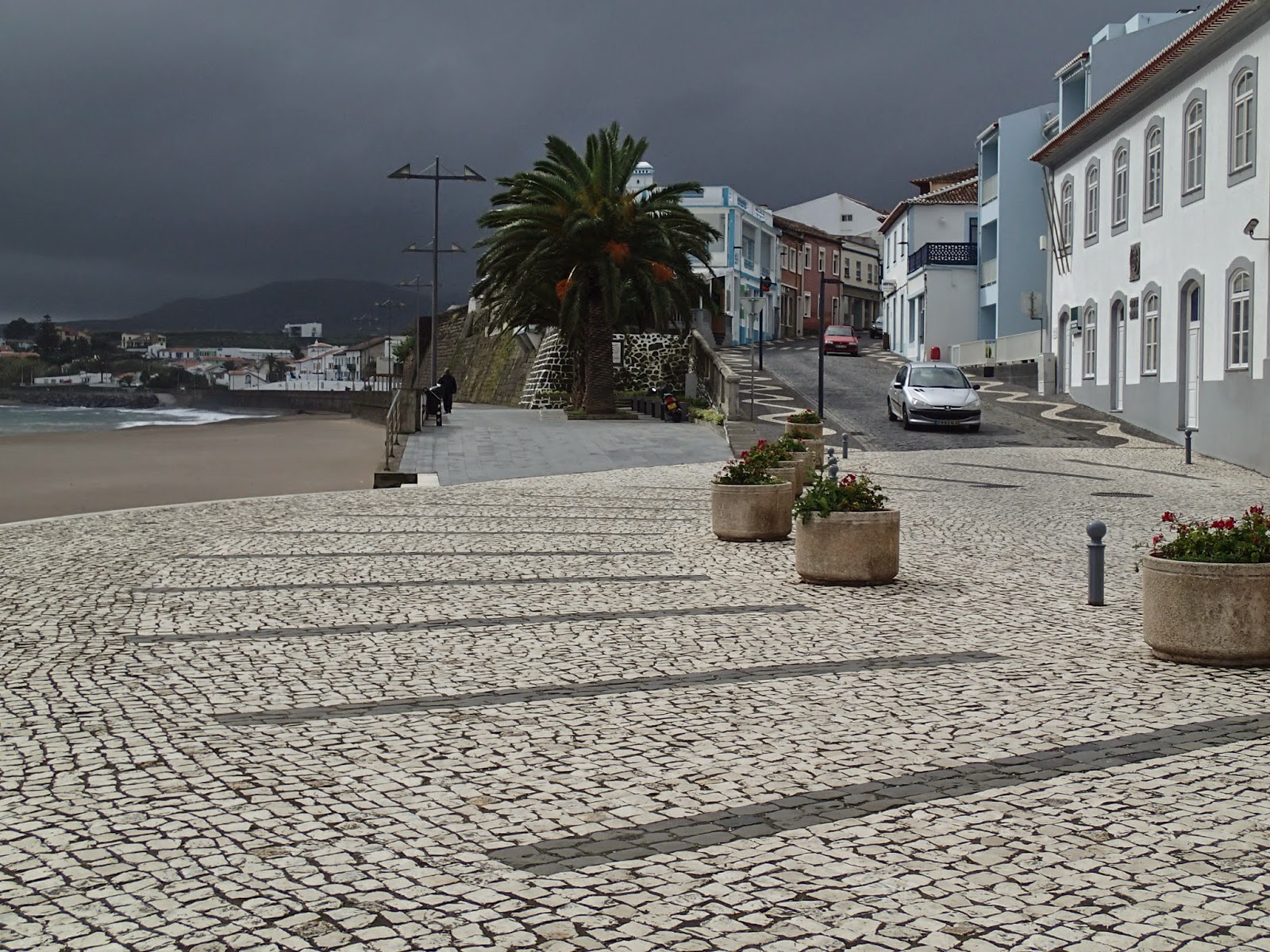
Praia streets
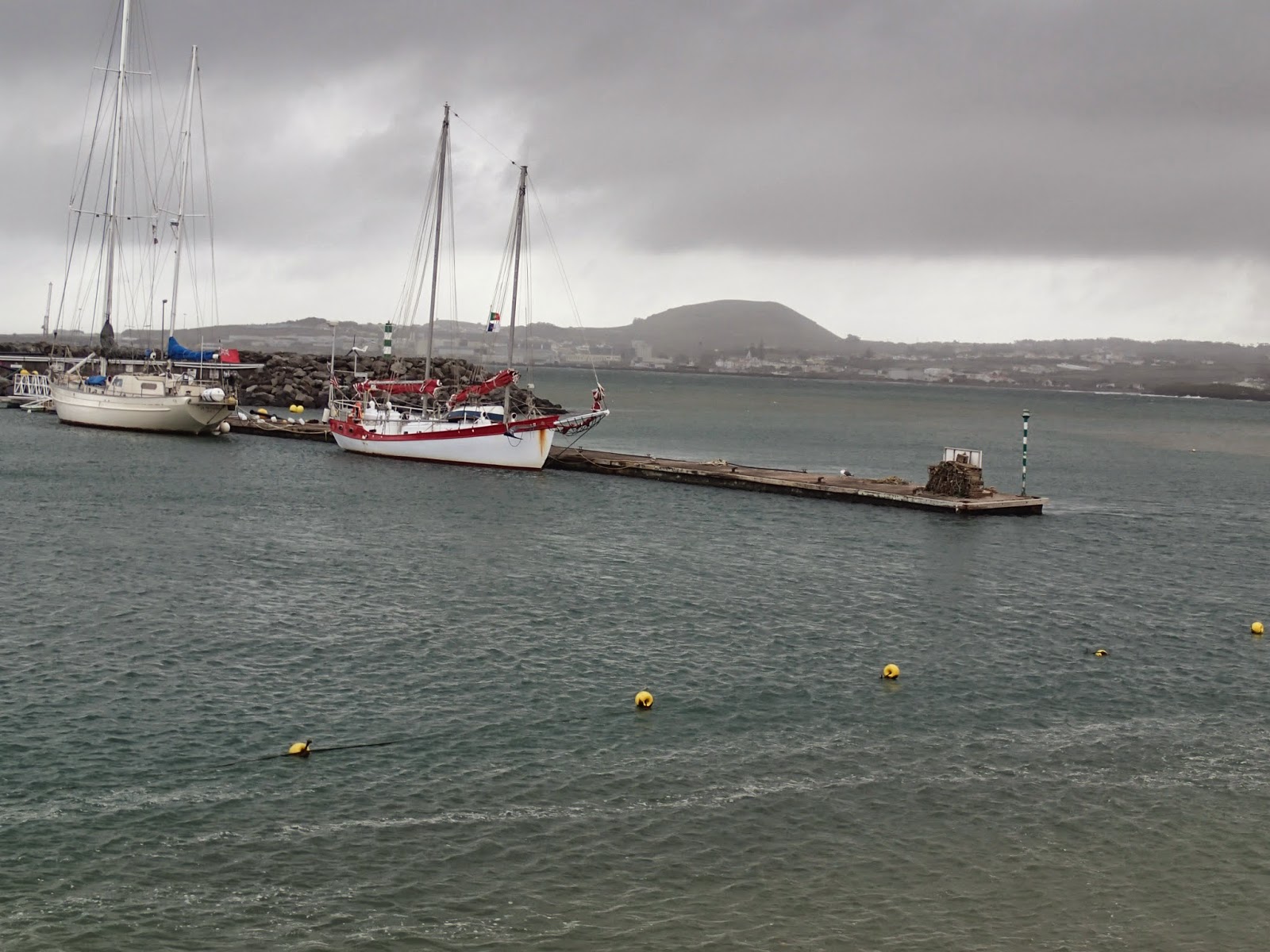
Nomad has been in the Azores for over a month now, most of the time in Praia da Vitoria on the Island of Terciera. I caught up on some much needed maintenance as this is the first time I have really stopped to work on the boat since leaving the Dominican Republic. I had sailed here with the intention of anchoring in the harbor, but the surge in the anchorage made launching the dinghy a hazardous operation. The marina transient rates here for 12 to 15 meter boats is about $10 USD per day including water, electric and wifi. Stay for a month and get 2 free days. This is a bit of a boat trap, as people stop in for a week or two and end up staying months or years! Walking around the marina one day, I noticed a familiar boat, it was a couple I had met in the Caribbean earlier this year and they are planning to settle here permanently. Everything in town is within walking distance and the is bus service all over the island including to Angra do Heroismo, on the south coast. 
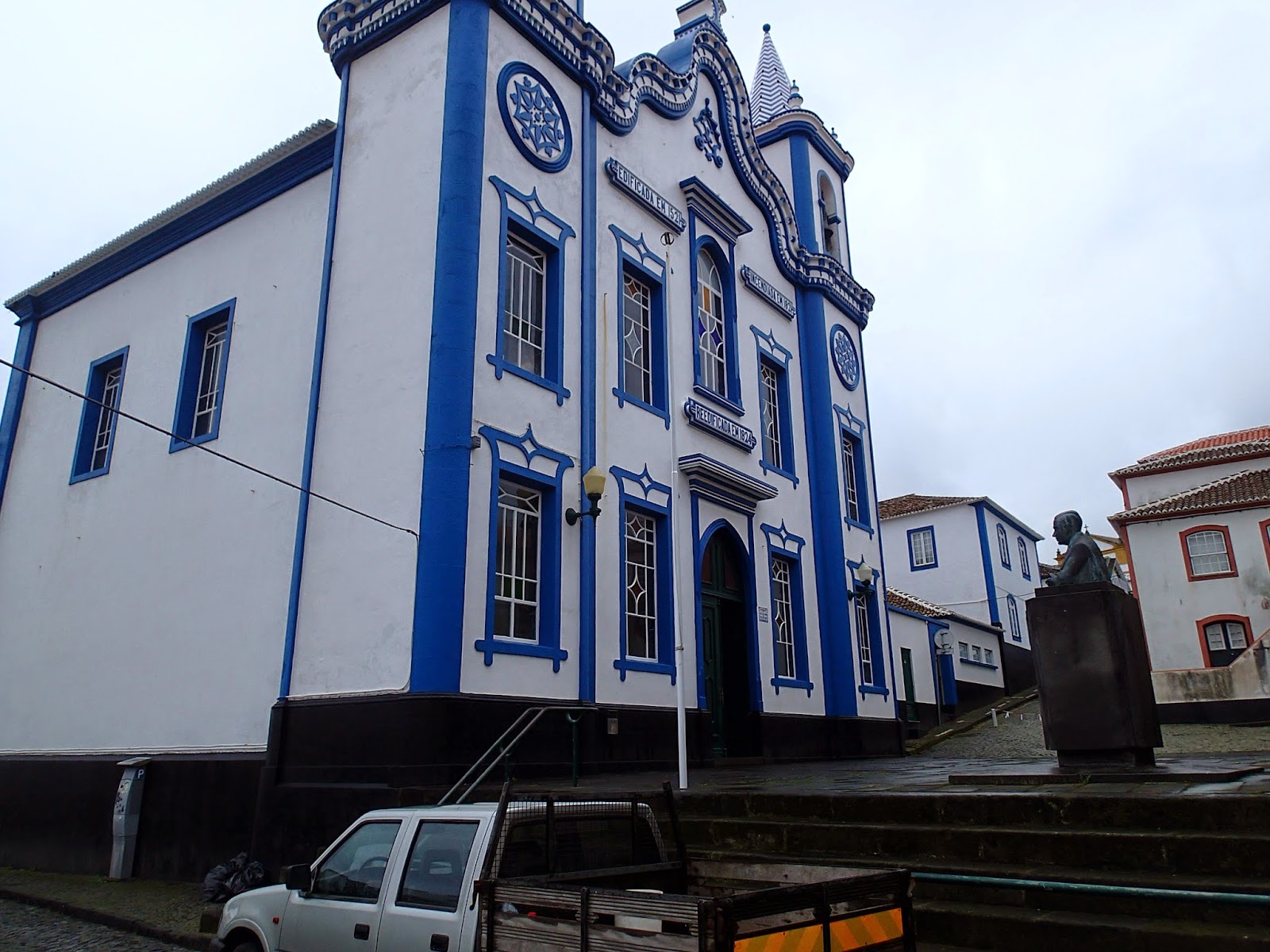
Old church in Praia
The Azores are an intriguing place with a lot of European history , having been settled since the early 1400's although is is thought that the islands were know of much earlier. The Azores has been a stopping place  for sailors from the time of Columbus, Labrador and Cabot through Slocum and  is still the stop of choice for cruisnig sailors crossing the Atlantic.
 It is mid November and the weather is beginning to change into the winter pattern here so it is time to get back to sailing again and head a little further south.
Very narrow entrance into the marina


Waterfront walk, Praia da Vitoria

Streets of Angra do Heroismo

Town square, Angra

Marina with anchorage space outside, Angra

Old church, Angra

Garden in Angra

Angra, more gardens

Looking up the stairs to the monument behind the Marina

Looking down, halfway to the top

Sunset over Praia from the monument

Praia da Vitoria


Sunday, November 2, 2014

Horta, Faial,Azores

Away from the cold green waters of the Grand Banks at last!
 The 15 day trip from St Pierre to Horta was uneventful thanks to a good break in the late season weather. The sea state crossing the Grand Banks was a bit rough with shallow water waves similar to the Gulf of Mexico with the added benefit of a 2-3 meter swell rolling down from the big storm to the north crossing the wind waves at a right angle. The windvane's water paddle hit something on the last bit of the Grand Banks and broke the safety tube.  While I replaced it and the chafed line that keeps the paddle attached to the boat if the tube breaks, the boat continued on course as if nothing happened. She balances very well with the right sail combination. Five days out
Beating into a stiff headwind
 and just off the Grand Banks I met another sailboat from Boston also enroute to Horta. They tacked across ahead of me and I did not see them again until they arrived in Horta about 15 hours after me. Also talked with a longliner working in the area at the same time, three boats meeting in mid ocean seems a bit crowded. There was a fair bit of traffic along 41N with many ships south of the great circle route avoiding the large storm just to the north.
I spent two days beating into headwinds before the wind changed , could only go SW(wrong direction) or NE(towards the large storm). I had wanted to stop Flores, but the two conditions that the guidebook said to avoid
The famed seawall in Horta with sailor's artwork
were both present, so I altered course for Faial. The forecast N wind veered to the NE, driving me S of Faial, so I motorbeat into it for the last 30 miles in order to make a daylight arrival. Cleared customs the next morning and was assigned a slip. I was told no anchoring in the harbor unless the marina was full. My mail was not to arrive for another four days, leaving me impressed that I could cross the Atlantic under sail faster than Express mail could! The swell from the storm up north caused quite a surge in the harbor for the first few days that I was here, breaking one dockline when the chafing gear slipped out of position overnight. That huge storm east of Greenland had been a feature on the weather fax for most of the trip and dwarfed the hurricanes that were coming north from the tropics. Ilda and Duncan at Mid Atlantic Yacht Service were a
 Horta city center
great help, receiving mail for me and getting replacement parts for the motor and windvane.
Horta streets
After eight days in Horta, there was a slight break in the weather, giving me just enough time to sail to Terciera.
City park  with good wifi for Skype calls

Saturday, November 1, 2014

St.Pierre

Entrance to the inner harbor
 The island of St Pierre with 6000 people is the population center of St.Pierre et Miquelon. This is mainly due to the large natural harbor on the island, while Miquelon, although much larger, has only a small man made basin.The children from Miquelon come here to finish their education and then they all go to France for for college. There is quite a bit of history here,from settelment times and the various wars to the rise and fall of the fishing industry. The largest boost to the local economy was during the USA Prohibition era when St Pierre was a major port for smuggling alcohol into the USA. It was far more profitable than fishing. I was anchored here for several days, but was
French wine
 unable to row ashore a few times due to high winds. When the forecast for the next storm went from 35 knots to 55 knots overnight, I decided it was time to find a dock. With the help of the local tourist office I received permission fro the Captain of the Port to tie up on the dock below his office on a Sunday afternoon, and remained there until I sailed for the Azores. I took a guided tour of the island that was very worthwhile learning about the place from a local resident who also speaks english. I explored most of the town on foot as it is not very large. There was a gas station near the docks, but it had been closed due to a fire. The other gas station was across town, but it was next to the fish market, so I came home with fresh fish and diesel on the refueling days. I had
Around town
refueled in Miquelon, but I was running the heater quite a bit in addition to the fuel I used motorsailing down from Miquelon. I looked around carefully but I could find no berries to pick, the season for them was over. There is an abundance of roses around St Pierre, so the big juicy rosehips became the fruit of the day with breakfast.  Grocery shopping was quite the adventure. Besides the linguistic challenge, there were many French and European foods I had never tasted before. There is a yacht club here, but their docks were very expensive.They also had the only public laundry in town that I could pay a small fee to use. I met one of the sailors from Miquelon who sailed here the day
St Pierre
after I arrived. After cold front associated with the storm that had just passed, there was a nice break in the weather clear across North America. Since it was getting late in the season in this area, I decided to forego anymore stops in Newfoundland and sail directly to the Azores while the weather was quiet.
Docked for approaching storm

Post office and Dounes on the docks

Waterfront walk